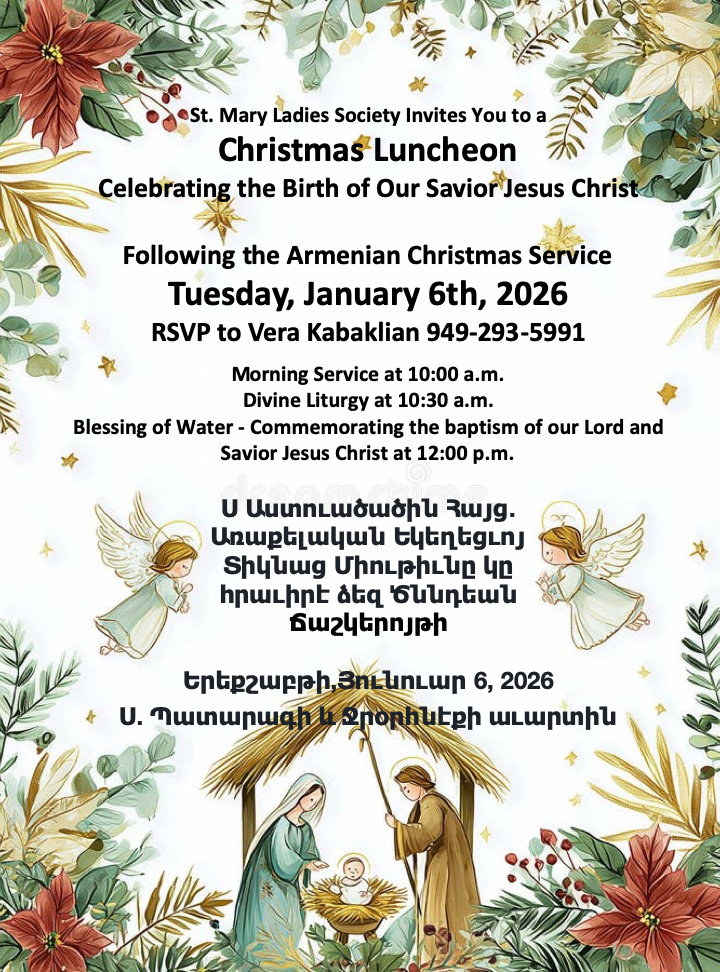
As the world winds down from the festive lights and carols of December 25th, many in the Armenian community are just beginning their preparations for a sacred celebration. If you've ever wondered why the Armenian Apostolic Church observes Christmas on January 6th—while much of the Western world does so on December 25th—you're not alone. This date isn't a mere calendrical quirk; it's a window into the ancient roots of Christianity itself.
The Ancient Origins of Christmas Dates
To understand January 6th, we must journey back to the early days of the Church. The Bible doesn't specify the exact date of Jesus Christ's birth, so early Christians didn't celebrate it as a separate feast. Instead, the focus was on Easter, the resurrection. By the 3rd and 4th centuries, however, feasts emerged to honor key moments in Christ's life.
In the Eastern Church—including what would become the Armenian Apostolic tradition—the Nativity (Christ's birth) was originally celebrated together with the Theophany (also known as Epiphany), which commemorates Christ's baptism in the Jordan River. This combined feast fell on January 6th. Why this date? It aligned with ancient solar symbolism and countered pagan winter festivals, emphasizing Christ as the "Light of the World." The baptism revealed the Holy Trinity: the Father's voice from heaven, the Son in the water, and the Holy Spirit as a dove. Pairing it with the birth underscored God's full manifestation (theophany) to humanity.
The Armenian Church, one of the oldest Christian denominations, has faithfully preserved this ancient practice. Unlike many others, we didn't separate the Nativity from Theophany. For us, January 6th is a unified celebration of God's incarnation and revelation—known as Dzununt (Nativity) and Asdvadzahaydnutiun (Theophany).
Why Not December 25th? The Western Shift
Around the 4th century, the Western Church (centered in Rome) began separating these events. They moved the Nativity to December 25th, possibly to Christianize the Roman festival of Sol Invictus (the "Unconquered Sun") on that date. This allowed Epiphany on January 6th to focus solely on the Magi's visit, symbolizing Christ's revelation to the Gentiles.
Today, most Western Christians—Catholics, Protestants, and Anglicans—celebrate Christmas on December 25th using the Gregorian calendar. This day emphasizes the joy of Christ's birth, with traditions like midnight masses, gift-giving inspired by the Magi, and cultural elements such as Santa Claus and decorated trees. Epiphany follows on January 6th, often marked by "Three Kings' Day."
In contrast, our Armenian observance on January 6th keeps the events intertwined, highlighting the theological depth of God's self-revelation from birth to baptism. It's a reminder that Christ's coming isn't just a historical event but an ongoing illumination in our lives.
The Eastern/Oriental Orthodox Variation: January 7th
Many Eastern Orthodox Churches (like Russian, Serbian, and Georgian) and Oriental Orthodox churches (like Coptic, Ethiopian, and Eritrean) celebrate Christmas on January 7th. This isn't a different feast—it's the same December 25th, but on the older Julian calendar, which lags 13 days behind the modern Gregorian one.
For Armenians, using the Gregorian calendar civilly means our January 6th is fixed and distinct—rooted not in calendar disputes but in preserving the original unified feast.
Differences at a Glance
- Western Christmas (December 25th): Focuses on Christ's birth. Epiphany on January 6th honors the Magi.
- Armenian Christmas (January 6th): Combines Nativity and Theophany. Emphasizes divine revelation through birth and baptism. Traditions include blessing water, special liturgies, and foods like anushabour (sweet wheat pudding) after a fast.
- Traditional Eastern/Oriental Orthodox Christmas (January 7th): Nativity on Julian December 25th. More ascetic with extended fasting; Theophany follows later.
These differences aren't divisions but reflections of Christianity's rich diversity, all pointing to the same miracle: God becoming human to save us.
The Deeper Meaning for Our Community
At St. Mary Armenian Church, celebrating on January 6th connects us to our apostolic heritage, reminding us that faith transcends time and calendars. It's an invitation to experience the Light of Christ anew—whether through the solemn Badarak (Divine Liturgy), the blessing of water distributed to parishioners, or gathering with loved ones for a festive meal.
In a world rushing through holidays, our tradition encourages reflection: Just as Christ was revealed gradually—from Bethlehem's manger to Jordan's waters—so too does God unfold in our lives. We warmly invite you to join us for Badarak on January 6th, where together we can witness this ancient joy.
Wishing you a blessed Dzununt yev Asdvadzahaydnutiun — Merry Christmas and Happy Theophany!